About
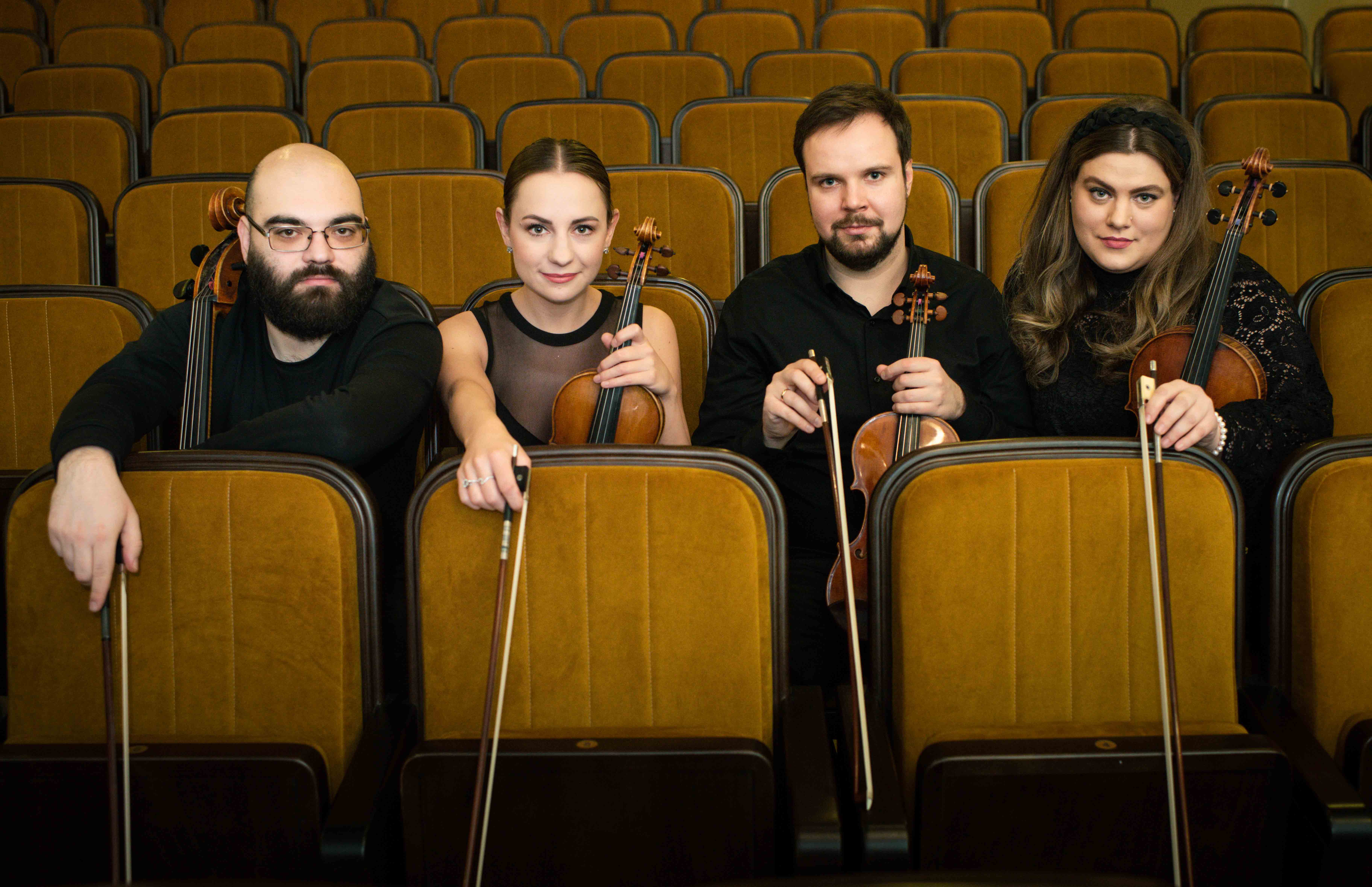
The Vilnius String Quartet and pianist Motiejus Bazaras invite you to spend Wednesday evening listening to Lithuanian, Ukrainian, and French chamber music.
Tonight’s concert features a premiere. Lithuanian composer Dominykas Digimas has titled his new work for piano and string quartet Observations. The composer says: “People experience the world through their senses, which enable them to form their own worldview, perceive their surroundings and, through them, themselves (...). Mikalojus Konstantinas Čiurlionis wrote about the sea: “The great, powerful, wonderful sea! Half the world is looking at you at night, distant suns drown their blinking, mysterious, slumbering glances in your depths, while you, eternal queen of giants, breathe peacefully and quietly, for you know that there is only you and nobody reigns over you.” Čiurlionis observed the sea. He photographed it, wrote texts inspired by it, created cycles of paintings, and dedicated musical compositions to it (...). This composition is a dedication to Čiurlionis’ observation of the sea. If it were a film, we would probably not see what he sees, but we would observe the artist’s face in close-up, how it changes as the sea changes.”
Best known to the audience as the composer of the enchanting Melody, Ukrainian composer Myroslav Skoryk wrote a wide variety of impressive music. Although using modern means of expression, the composer often drew inspiration from the rich Ukrainian folklore. Among Skoryk’s most popular works are Carpathian Concerto for orchestra, Hutsul Triptych, concertos for violin, piano, and cello; he composed music for about 40 films, wrote jazz and popular music. Tonight’s programme features his five-movement Partita No. 3, composed in 1973.
This year marks the 150th anniversary of the birth of French impressionist composer Maurice Ravel. If one had to describe this composer and his creative legacy in one word, it would be ‘colourfulness.’ The impressionistic touch, the variety of timbres in his orchestration, the inspiration stemming from the works of old masters, his creative friendship with George Gershwin, the influence of Spanish folklore, and his fascination with the dance genre all testify to his colourful personality and multifaceted artistic universe. Ravel’s vast creative legacy includes only one String quartet, in F major, M. 35, composed in 1903 and premiered the following year in Paris. Critics were divided: Ravel’s opponents criticized the work, while his supporters praised it, describing the composer as ‘one of the masters of tomorrow.’