Performers
LITHUANIAN NATIONAL SYMPHONY ORCHESTRA
(artistic director and principal conductor Modestas Pitrėnas)
Soloist GUIDO FELIPE SANT’ANNA E SILVA (violin, Brasil)
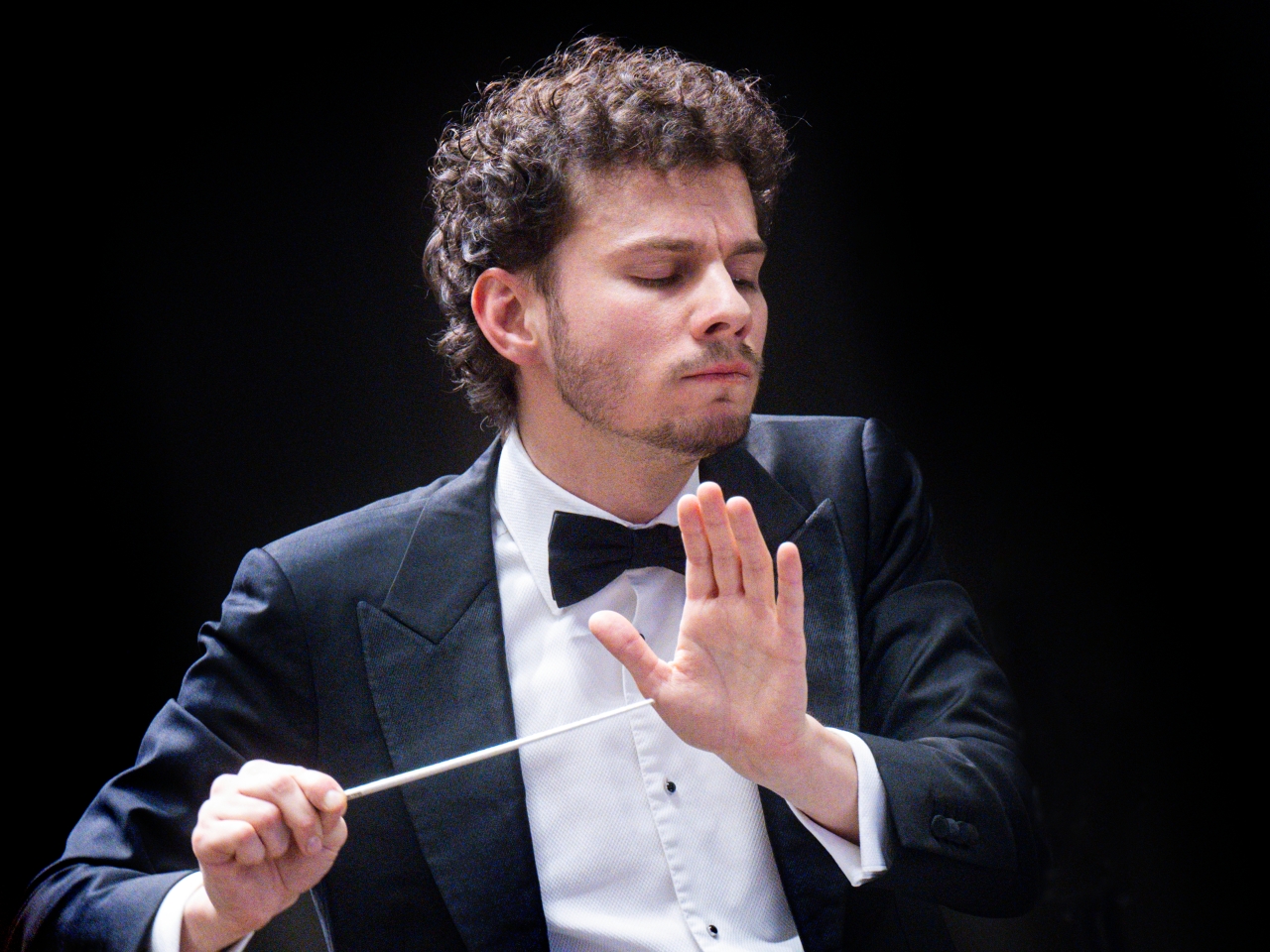
Conductor MARTYNAS STAKIONIS
Programme
CLAUDE DEBUSSY – Symphonic poem Prélude à l’après-midi d’un faune (Prelude to the Afternoon of a Faun), L. 86
ERNEST CHAUSSON – Poem for violin and orchestra, Op. 25
MAURICE RAVEL – Tzigane (Gypsy) for violin and orchestra, M. 76
FRANZ SCHREKER – Kammersyphonie (Chamber Symphony)
About
Already familiar to Lithuanian National Philharmonic audiences, Brazilian violinist Guido Felipe Sant’Anna e Silva, winner of the Fritz Kreisler Violin Competition, and conductor Martynas Stakionis return to the Philharmonic stage with a programme of French music, which opens with Claude Debussy’s symphonic poem Prélude à l’après-midi d’un faune (Prelude to the Afternoon of a Faun) – a work that can be called the benchmark of French impressionism.
The concert programme continues with French romanticist Ernest Chausson’s Poem for violin and orchestra, Op. 25. It is one of his most famous and beautiful works, one of the most treasured by the composer himself, which he originally titled Le Chant de l’amour triomphant (Triumphant Song of Love). French impressionist Maurice Ravel’s Tzigane (Gypsy) for violin and orchestra not only lends a rhapsodic temperament to the concert programme but also allows the young violin virtuoso to demonstrate his astonishing mastery.
The concert concludes with Austrian composer Franz Schreker’s Kammersyphonie (Chamber Symphony), which follows the modern music tradition of the era of Debussy and Ravel, particularly the ideas of Arnold Schönberg, the patriarch of Austrian modernism. The work, dedicated to the centenary of the Vienna Academy of Music, was composed from musical material from the composer’s unfinished opera Die tönenden Sphären (The Resounding Spheres). Arguably, it is Schreker’s most famous work.