Performers
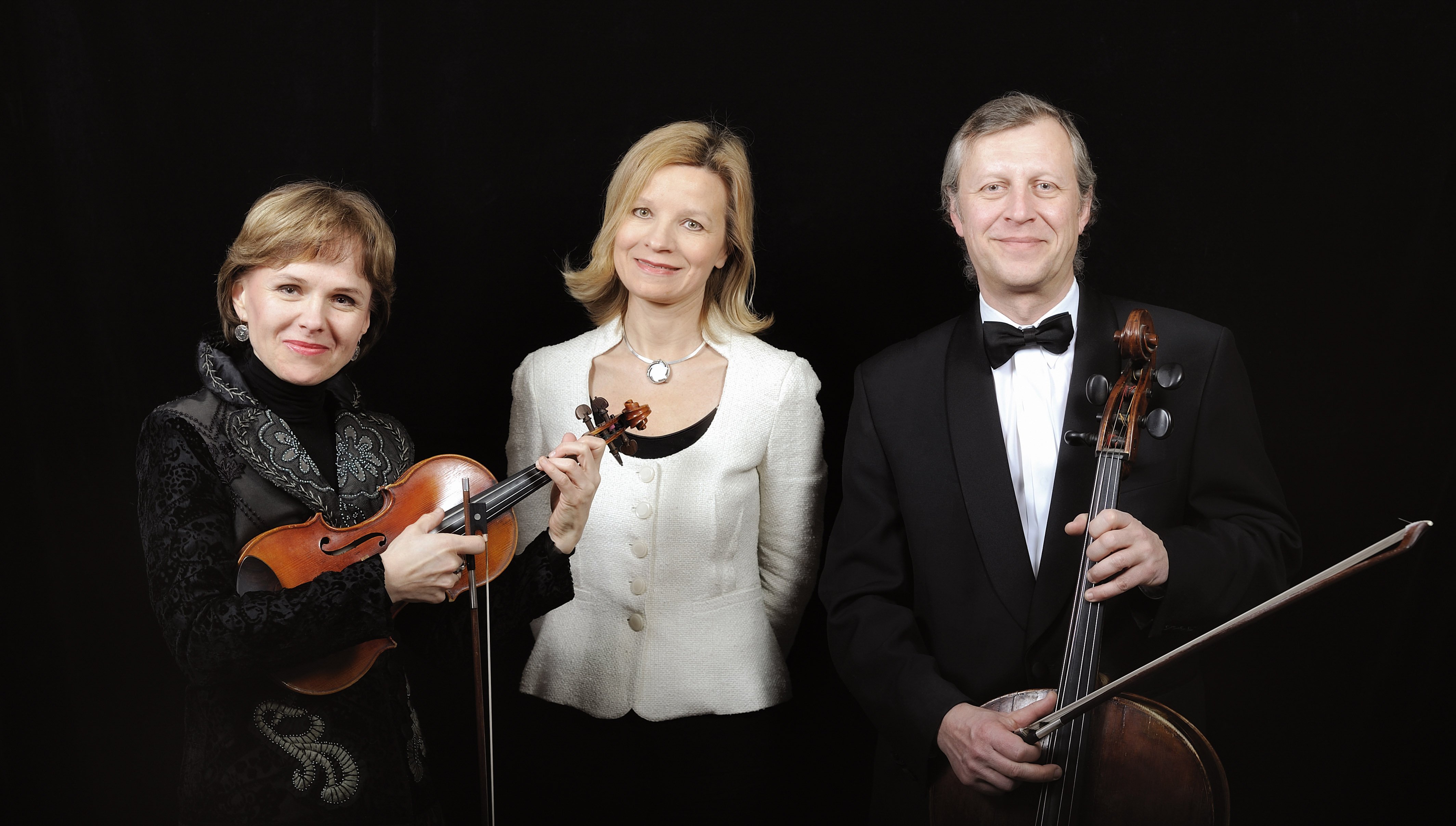
Trio KASKADOS: RUSNĖ MATAITYTĖ (violin), EDMUNDAS KULIKAUSKAS (cello), ALBINA ŠIKŠNIŪTĖ (piano)
Programme
LUDWIG VAN BEETHOVEN – Piano trio, Op. 1 No. 3 in C minor
VYKINTAS BALTAKAS – Re(a)line II (dedication to Trio Kaskados, premiere)
BEDŘICH SMETANA – Trio, Op. 15, in G minor, JB 1:64
About
Over its 28 years of its existence, the renowned piano Trio Kaskados has developed its own performance style, which is strongly rooted in classical and romantic music. However, the Trio’s programmes always feature striking premieres by Lithuanian composers, which eventually become paragons of Lithuanian modernism. This has been the case with works by Osvaldas Balakauskas, Bronius Kutavičius, Feliksas Bajoras, Jurgis Juozapaitis, Anatolijus Šenderovas, Loreta Narvilaitė, and Raminta Šerkšnytė performed by Kaskados. In this concert, the Trio presents another intriguing premiere. The composer of the new work is one of the most interesting Lithuanian composers, conductors, and educators of today, Vykintas Baltakas. The members of Kaskados have been actively collaborating with the composer on various projects for many years, have performed all of his works for violin, cello, and piano, and are members of the LENsemble founded by Baltakas. The new work is dedicated specifically to this Trio. “In musical terms, I have long been fascinated by the idea of lively and constantly alternating lines, woven together like fabric by three equal instruments,” says the composer.
Other works featured in the programme span different eras – classical music and the beginning of the 20th century. Kaskados has performed all of Beethoven’s piano trios, so, according to the musicians, it is good to revisit the early Beethoven, and this time perform his Trio, Op. 1 in C minor, enjoying the vigour of youth and unquenchable joy, enriched with the musicians’ own accumulated experience.
Kaskados’ repertoire includes the only Piano trio (1855) by Bedřich Smetana, a romantic composer known as the father of Czech music. He wrote the opus after losing his eldest daughter Bedřiška. A young girl of great musical abilities with whom Smetana had an especially close relationship died of scarlet fever at the age of four. The score is permeated with echoes of pain and sadness, with melodies based on intervals reminiscent of sighs. Its grief-stricken and elegiac character is unmistakable. However, one also feels the influence of Eastern-European folk music with its unbridled passion, spanning rhapsodic forms full of rich thematic variation and the richness of the piano part. This Trio is a milestone of chamber music.