Performers
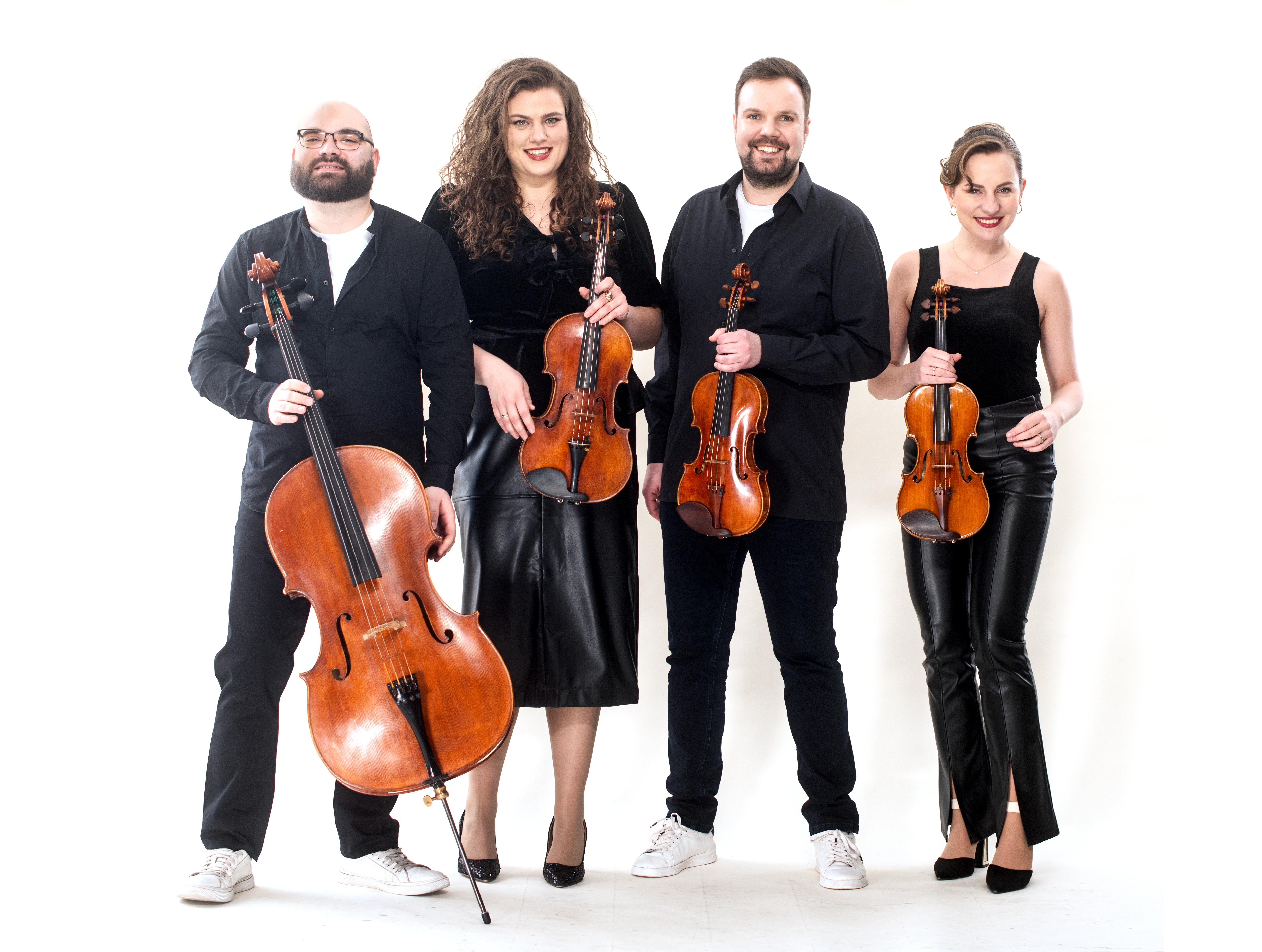
VILNIUS STRING QUARTET
GINTARAS JANUŠEVIČIUS (piano)
DONATAS BAGURSKAS (double bass)
Programme
WOLFGANG AMADEUS MOZART – Serenade for strings No. 13 in G major (Eine Kleine Nachtmusik), KV 525
FRANZ SCHUBERT – Forellenquintett (The Trout Quintet) for piano, violin, viola, cello and double bass in A major, Op. Post. 114 / D. 667
About
The farewell to the Old Year with Franz Schubert’s Forellenquintett (The Trout Quintet) has long been a beautiful tradition of the Vilnius String Quartet and its friends.
Schubert wrote this opus in 1819 at the age of 22, but it was not published during his lifetime and did not appear until a year after his death in 1829. Today, the quintet is considered one of the most important masterpieces of chamber music. The line-up of the quintet seemed somewhat unusual at the time – instead of the traditional combination of piano and string quartet, the composer involved a double bass in place of a second violin. Forellenquintett (The Trout Quintet) was commissioned by Sylvester Paumgartner, a wealthy patron and amateur cellist, who suggested that Schubert incorporate the previously composed and well-known song Forelle (The Trout).
On the last evening of 2026, the Vilnius String Quartet will perform this work with pianist Gintaras Januševičius and double bassist Donatas Bagurskas. Alongside Forellenquintett (The Trout Quintet), the New Year’s Eve programme will feature Wolfgang Amadeus Mozart’s cheerful and festive Serenade for strings, Eine Kleine Nachtmusik (A Little Night Music), a piece particularly beloved by audiences. It would be difficult to find anyone with even a passing interest in music who hasn’t heard this piece. Although the patron and the purpose of its creation are unknown, at the time the composer wrote quite a few serenades and divertimentos for receptions in parks, various outdoor events, concerts at the homes of friends and patrons, weddings, birthdays, and other celebrations.