About
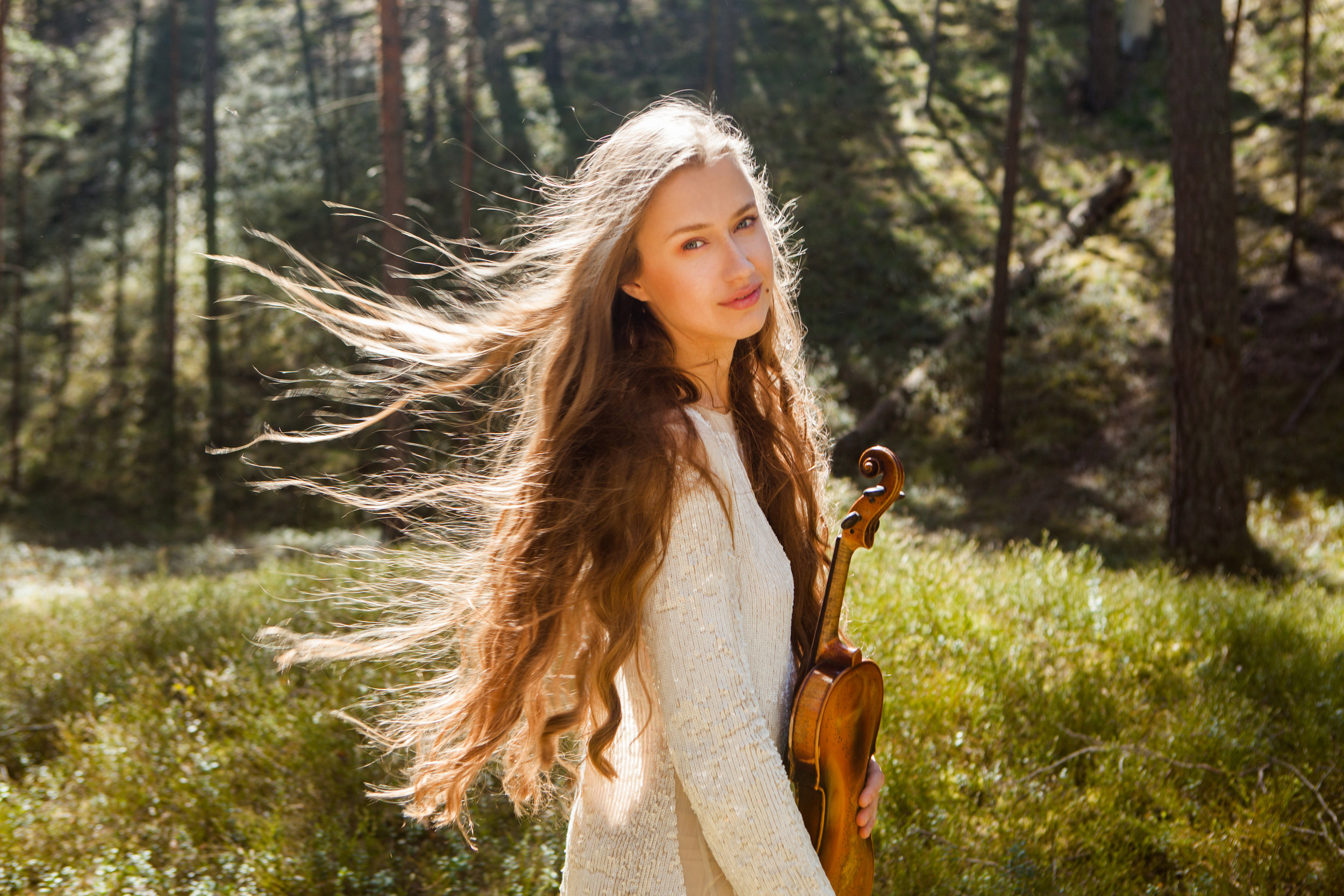
Tonight, the Lithuanian National Symphony Orchestra and its principal guest conductor, Victorien Vanoosten, shares the stage with Latvian violinist Kristīne Balanas. The foreign press describes her playing as “savage, bold, and dramatic” (The Strad) and marvels at the soloist’s transformation from a street musician and rock singer in Latvia to an internationally recognized classical music performer. Balanas is the third prize winner at the 66th ARD Music Competition and has been awarded the Latvian Grand Music Award. The soloist has performed in concert halls such as the Berlin Philharmonic, London’s Southbank Centre, and New York’s Carnegie Hall.
The programme is immersed in the sounds of Spain. French composer Emmanuel Chabrier’s rhapsody for orchestra, España (Spain, 1883), is one of his most striking works, composed after a trip to Spain, where he took an interest in the local folklore. Édouard Lalo, the son of a Spanish émigré, studied violin and composition at the Paris Conservatoire, and in 1875, after the famous Spanish violinist Pablo Sarasate performed his Symphonie espagnole (Spanish Symphony), he became renowned as a composer. The work is characterized by extrinsic brilliance and spectacular virtuosity and is rich in dance rhythms; some episodes are shrouded in an elegiac sadness.
The Hungarian composer Béla Bartók composed his Concerto for orchestra, Sz. 116, toward the end of his life in 1943, after fleeing to the United States to escape the war in Europe. The title “Concerto for orchestra” stems from the composer’s intention to showcase each of the orchestra’s principal instruments as a soloist, to group them in sections that compete with one another, and to allow the orchestra to reveal the full range of its timbral colours: the opus is akin to the instrumental concerto, while the orchestral parts are characterized by virtuosity.