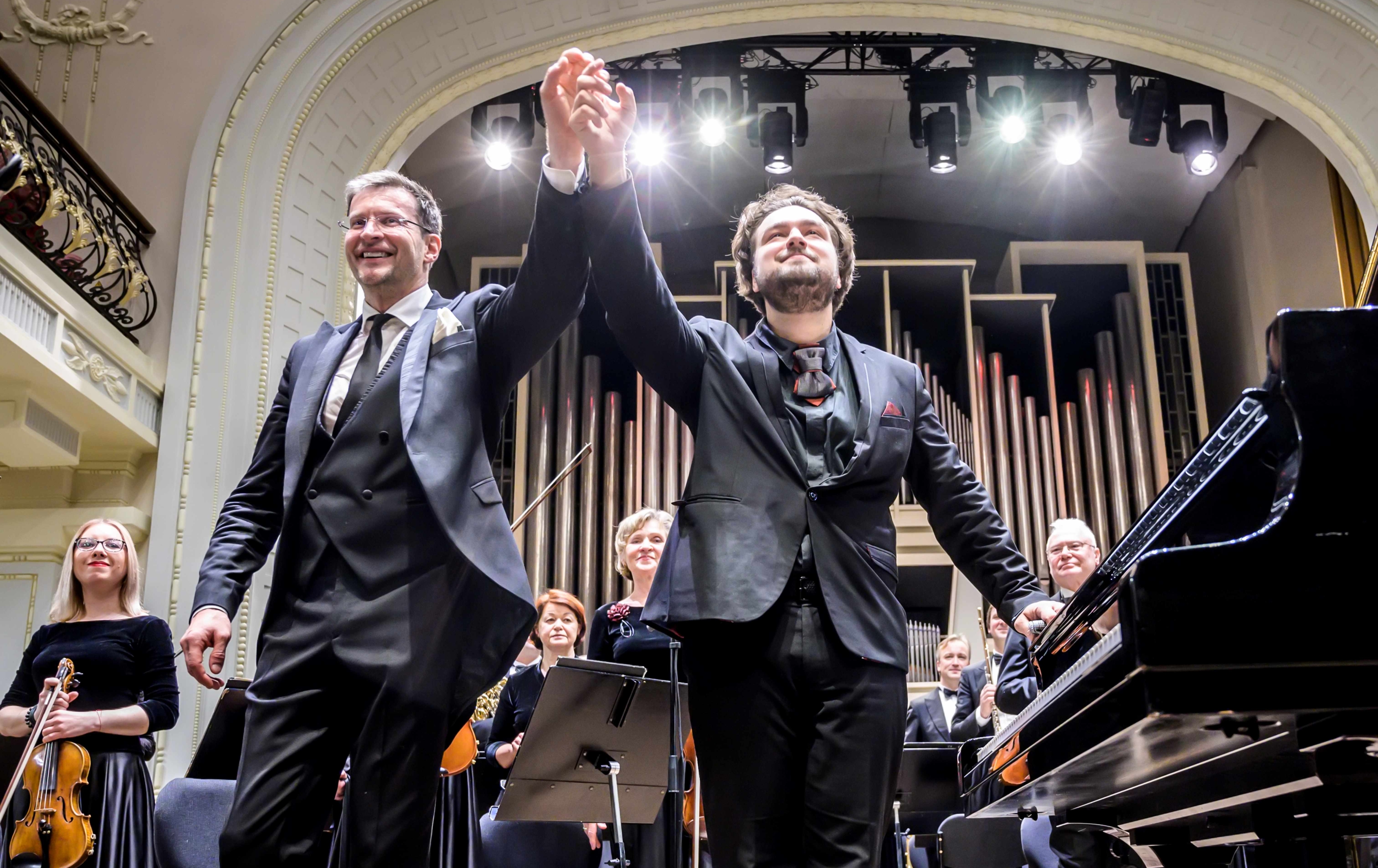
Meeting of the masters of Romanticism. LNSO, Lukas Geniušas, Modestas Pitrėnas
Performers
LITHUANIAN NATIONAL SYMPHONY ORCHESTRA
(artistic director and principal conductor Modestas Pitrėnas)
Soloist LUKAS GENIUŠAS (piano)
Conductor MODESTAS PITRĖNAS
Programme
JOHANNES BRAHMS – Concerto for piano and orchestra No. 1 in D minor, Op. 15
ANTONÍN DVOŘÁK – Symphony No. 7 in D minor, Op. 70, B. 141
About
This programme is one of those rare occasions when only two monumental works are needed to achieve harmonious whole. In this case, they are Johannes Brahms’ monumental Concerto for piano and orchestra No. 1 in D minor and Antonín Dvořák’s Symphony No. 7 in D minor. They both are considered to be among the most sublime and bona fide examples of instrumental music in the entire history of music.
The creative process behind Brahms’s monumental Concerto, which is longer in duration than Beethoven’s legendary Emperor (No. 5), took almost five years. The musical material of this Concerto is so intense that critics claimed it could not be enjoyable – the dissonances in the high register seemed very uncomfortable to the ears of listeners at that time. To this day, this work remains one of the most impressive large-scale works for piano and symphony orchestra.
Dvořák was inspired to compose his Seventh symphony by the growing wave of nationalism in the Czech Republic at the time and resistance to the policies of Austro-Hungarian Empire. Like most composers from small countries, Dvořák longed for recognition outside the Czech Republic, and Brahms’ support helped him achieve this: the premiere of the Seventh symphony in London was a success, so the composer himself saw this work both as an opportunity for personal creative expression and as a new symbol of Czech patriotism, hoping to stir the whole world with it. And he succeeded: his biographer John Clapham wrote that the dramatic power, emotional depth, and breadth of vision of this work were unmatched by any other work Dvořák composed before.