About
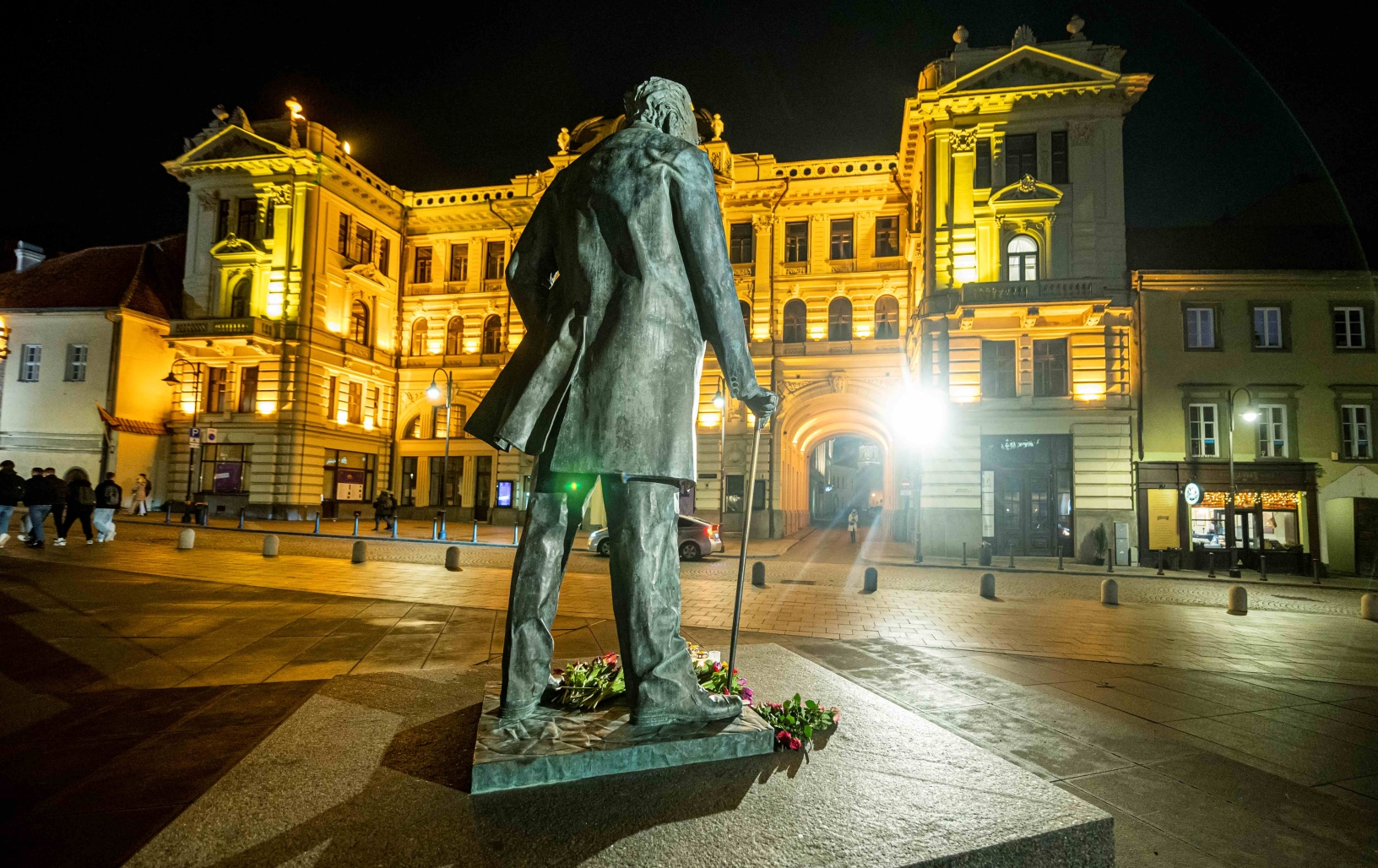
An exhibition arranged by the National Museum of Lithuania is on display in the foyer of the Lithuanian National Philharmonic Society.
Exhibition organizers: National Museum of Lithuania and Lithuanian National Philharmonic Society
Exhibition curator: Jūratė Gudaitė
Architect: Giedrė Narbutienė
Designer: Jurga Karosaitė
In commemoration of the 120th anniversary of the Great Seimas of Vilnius, as proclaimed by the Seimas of the Republic of Lithuania, the Lithuanian National Philharmonic Society is presenting a solemn concert and exhibition in cooperation with the National Museum of Lithuania. The concert, featuring renowned performers, will showcase works by Lithuanian composers that convey a spirit of historicity and sacredness – from the salute for 150th anniversary of Čiurlionis to the opuses of contemporary composers – as well as excerpts from the opera I Lituani (The Lithuanians) by the famous 19th-century Italian composer Amilcare Ponchielli, who inscribed Lithuania’s name in the history of music.
120 years ago, on December 4–5, 1905, the first Lithuanian congress was held in Vilnius. It was an event of great significance, demonstrating the strong desire and will of the nation to unite and work towards the complete independence of Lithuania.
According to contemporary accounts, the idea to convene a congress of national representatives in Vilnius came from Jonas Kriaučiūnas, who shared it with Jonas Basanavičius and Petras Vileišis. It was decided to convene the congress immediately, so on November 2, 1905, about 20 proactive compatriots were invited to the editorial office of Vilniaus žinios, where Basanavičius presented the idea and proposed to form an organizing committee for the congress. Fifteen prominent figures of various political views were elected to the committee, and Basanavičius was entrusted with the duties of chairman. On November 11, 1905, Vilniaus žinios published “Atsišaukimas į lietuvių tautą” (An Appeal to the Lithuanian People), in which compatriots from each district and parish were invited to come to Vilnius on December 4–5 to discuss the current situation of their region and people and decide how to achieve a better future.
Delegates gathered not only from all over Lithuania, but also from Latvia, Russia, Poland, and Ukraine. The congress of Lithuanian representatives, soon named the Great Seimas of Vilnius, worked for two days in the City House (now the premises of the Lithuanian National Philharmonic Society). The main issue that caused the most controversy was the demand for autonomy for Lithuania with a democratically elected Seimas in Vilnius. Four main resolutions were unanimously adopted. They declared that Lithuanians must unite to fight against their current enemy, the tsarist government, that the native Lithuanian language be used in districts, churches, and schools, that schools be purely nationalistic, and that teachers be selected by the people. With a print run of 36,000 copies printed by Petras Vileišis’ printing house, the resolutions were distributed throughout the country. The political goals and expectations of the nation announced in them encouraged and inspired Lithuanian society to continue fighting for their rights. Cultural and social activities intensified throughout Lithuania, especially in Vilnius. Art, science, and education societies were established, Lithuanian newspapers and schools were founded, and Lithuanian plays, concerts, and evenings were organized.
The idea of Lithuanian autonomy raised at the Great Seimas of Vilnius was implemented on February 16, 1918, when the Lithuanian Council adopted a resolution proclaiming “the restoration of an independent, democratically organized Lithuanian state with its capital in Vilnius.”