Performers
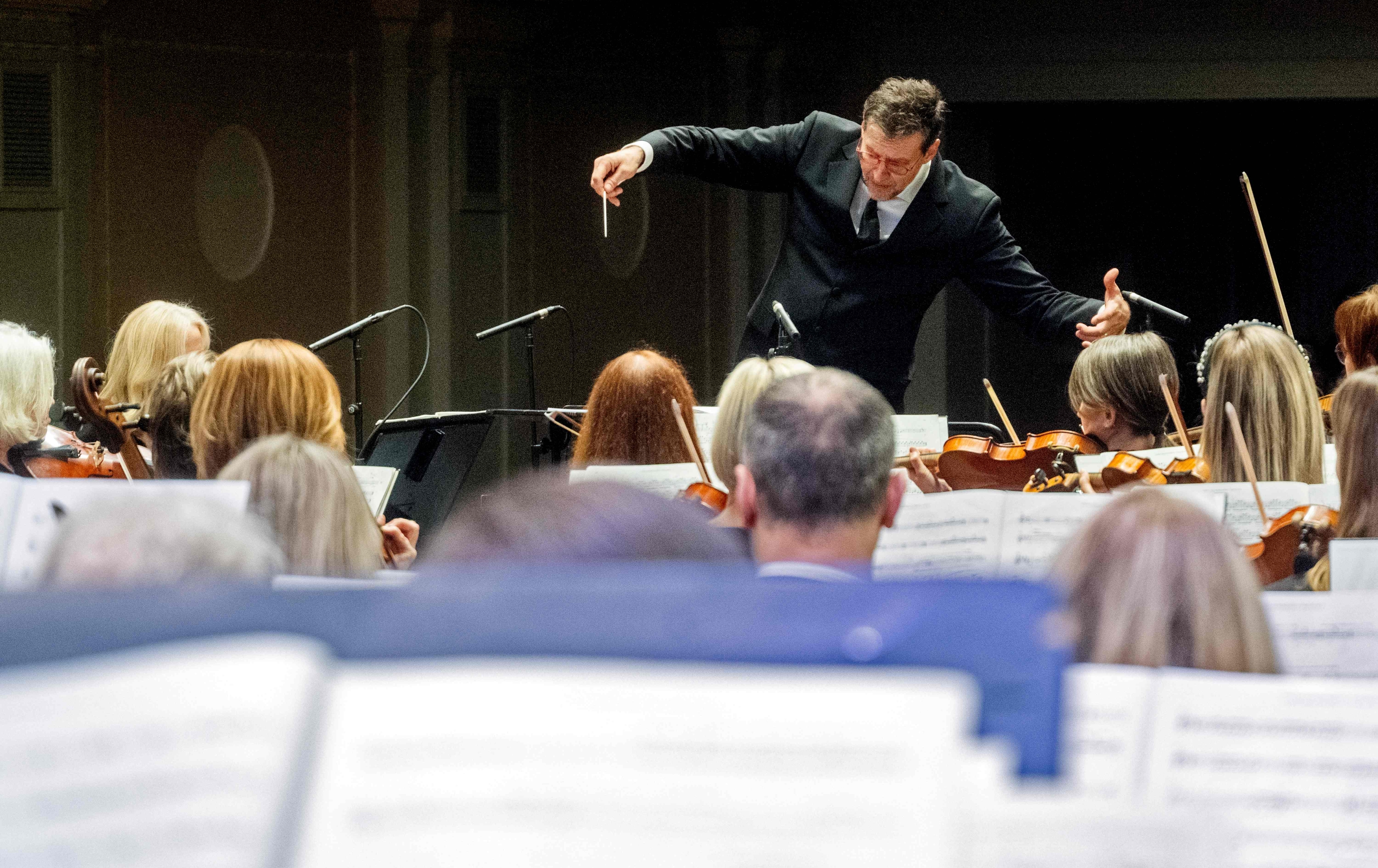
LITHUANIAN NATIONAL SYMPHONY ORCHESTRA
(artistic director and principal conductor Modestas Pitrėnas)
Soloists: PETRAS GENIUŠAS (piano), RENATA MARCINKUTĖ-LESIEUR (organ)
Conductor MODESTAS PITRĖNAS
Programme
ERNST VON DOHNÁNYI – Sinfonische Minuten (Symphonic Minutes), Op. 36
MANUEL DE FALLA – Noches en los Jardines de España (Nights in the Gardens of Spain) for piano and orchestra (to mark the composer Manuel de Falla’s 150th anniversary)
JOSEPH JONGEN – Symphonie concertante (Concert Symphony) for organ and orchestra
About
The Lithuanian National Symphony Orchestra, its artistic director and conductor Modestas Pitrėnas, and pianist Petras Geniušas invite the audience to spend the night in the exotic gardens of Spain: Manuel de Falla’s Noches en los jardines de España (Nights in the Gardens of Spain), or more precisely, the gardens of Andalusia, where the composer, whose 150th birth anniversary is being commemorated worldwide this year, was born. In 1909, while living in Paris, Falla began working on this opus as a collection of nocturnes for solo piano, but pianist Ricardo Viñes suggested that the composer include an orchestra.
Ernst von Dohnányi, a Hungarian composer of a poignant fate, belongs to a generation that connected two worlds: he played for Brahms in his childhood, survived two world wars, lived through the dawn of the space age, witnessed the 20th-century dissonances and avant-garde winds. Like R. Strauss, M. Reger, M. Bruch, and S. Rachmaninov, Dohnányi remained faithful to the ideas of late Romanticism. Written in 1933, the composition Sinfonische Minuten (Symphonic Minutes) consists of five short movements, each lasting only a few minutes, and is undoubtedly one of the composer’s most popular works.
Belgian composer and organist Joseph Jongen represents the Walloon school. His best-known work is Symphonie concertante (Concert Symphony) for organ and orchestra, composed in 1926. Tonight’s performance features organist Renata Marcinkutė-Lesieur as the soloist. Jongen is considered a successor to the traditions of Franck, Fauré, Debussy, and Ravel.